 Back
Back
Sea cucumbers stabilise carbon sinks
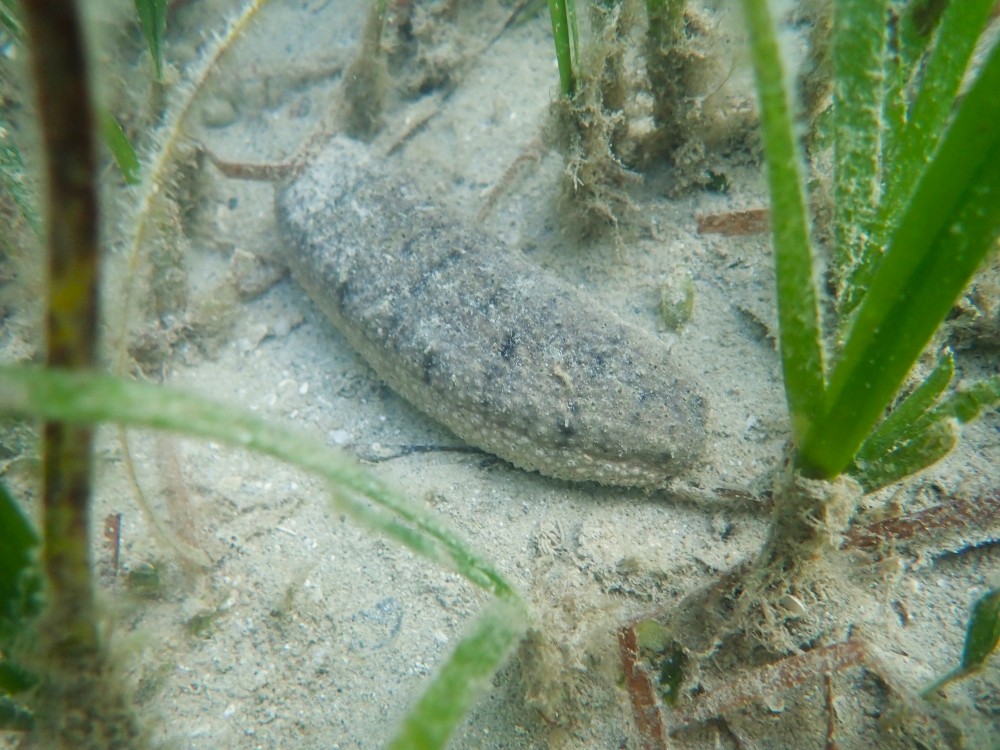
Sea cucumber cultivated in their natural seagrass habitat. Credit – CSERM UNAS.
Building climate resilient coastal communities through strengthening Selayar’s
near-shore economy
The coastal residents of the Selayar Islands, an island regency located in the middle of the Indonesian archipelago, have a profound relationship with the sea. The majority of them depend on fishing for their livelihoods, which is their primary source of income. The main catches in this region are bream, grouper, and houndfish. Climate change has resulted in declining catches due to increasingly uncertain fishing activities.
The impact of weather and climate uncertainty due to climate change hampers fishing activities and further reduces catches. More fuel is required to support fishing trips, leading to lower household income. The decline in catches contributes to reduced family incomes, which compromises the economic resilience of coastal households. To strengthen the islands’ water, energy, and food security nexus, alternative livelihood options are crucial for rebalancing resource allocation in coastal communities.
Aquaculture is one way to meet global food needs and is an important source of livelihoods in coastal areas. Fish production through aquaculture can supply a predictable income amidst the challenges of climate change. Sustainable aquaculture is essential to ensure that fisheries avoid environmental damage and maintain sustainable operations. This includes paying careful attention to both the species selected for cultivation, and the impact of cultivation on the surrounding marine environment.
Sea cucumbers are a high-value marine product and are beneficial to seagrass beds because they increase the health of seagrass ecosystems by breaking down organic matter and contributing to ecosystem maintenance. Holothuria scabra, commonly known as sandfish, is a type of sea cucumber native to tropical regions that boasts high nutritional and economic value. Sandfish can be cultivated using simple technology that utilises the organism’s natural seagrass habitat with minimal disruption, requiring low maintenance (e.g. no additional feed required). Sea cucumber cultivation in coastal areas can be carried out by both women and men, making this activity gender-inclusive, and extended ‘grow-out’ periods (time in which sea cucumbers reach a marketable size) offer more opportunity for sea cucumbers to spawn prior to harvesting for sale, helping maintain wild population stock. Therefore, sustainable sandfish aquaculture can contribute to building climate change resilience, both in terms of local climate-resilient livelihoods, and also by preserving or restoring seagrass beds, which function as vital blue carbon sinks.
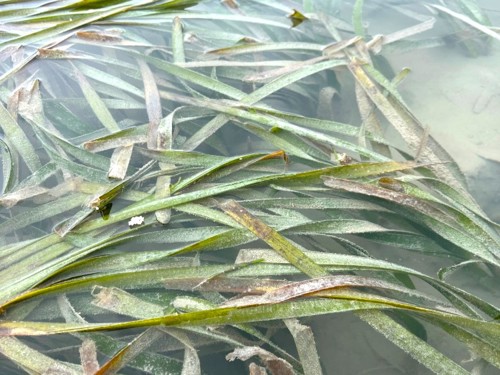
Sustainable sea cucumber cultivation in the Selayar Islands was initiated and implemented by the Center for Sustainable Energy and Resources Management, Universitas Nasional (CSERM UNAS). Through this an increase in the growth rate of Enhalus acoroides seagrass leaves (of over 0.67 – 1.57 mm per day) was observed in the sea cucumber cultivation area compared to seagrass beds located significant distances from the cultivation location. This finding is consistent with another seagrass species, Thalassia hemprichii, which experienced increased growth due to sea cucumber cultivation in Madagascar. This is believed to be associated with a higher sea cucumber abundance which leads to increased oxygenation and sediment cycling. Furthermore, the organic matter content in the seagrass beds where sea cucumbers are cultivated in Selayar is also more than 14% higher than in the seagrass beds where sea cucumbers are not cultivated.
More broadly, the challenge of strengthening climate resilience has been integrated into these aquaculture operations, which protect critical habitat while simultaneously positioning local communities as custodians of their near-shore environment. In developing this ‘blue carbon’ sea cucumber cultivation, which is arguably capable of maintaining and enhancing seagrass habitat function, the long-term prospect of securing additional income from seagrass carbon credit schemes should be explored to further reinforce sustainability in the Selayar Islands’ coastal economy.
Written by Qurratu Ainin and Christopher Kelly. For more information on this Darwin Initiative Main project 30-025, led by CSERM - Center for Sustainable Energy and Resources Management, click here.