 Back
Back
Climate adaptation for sea moss farming
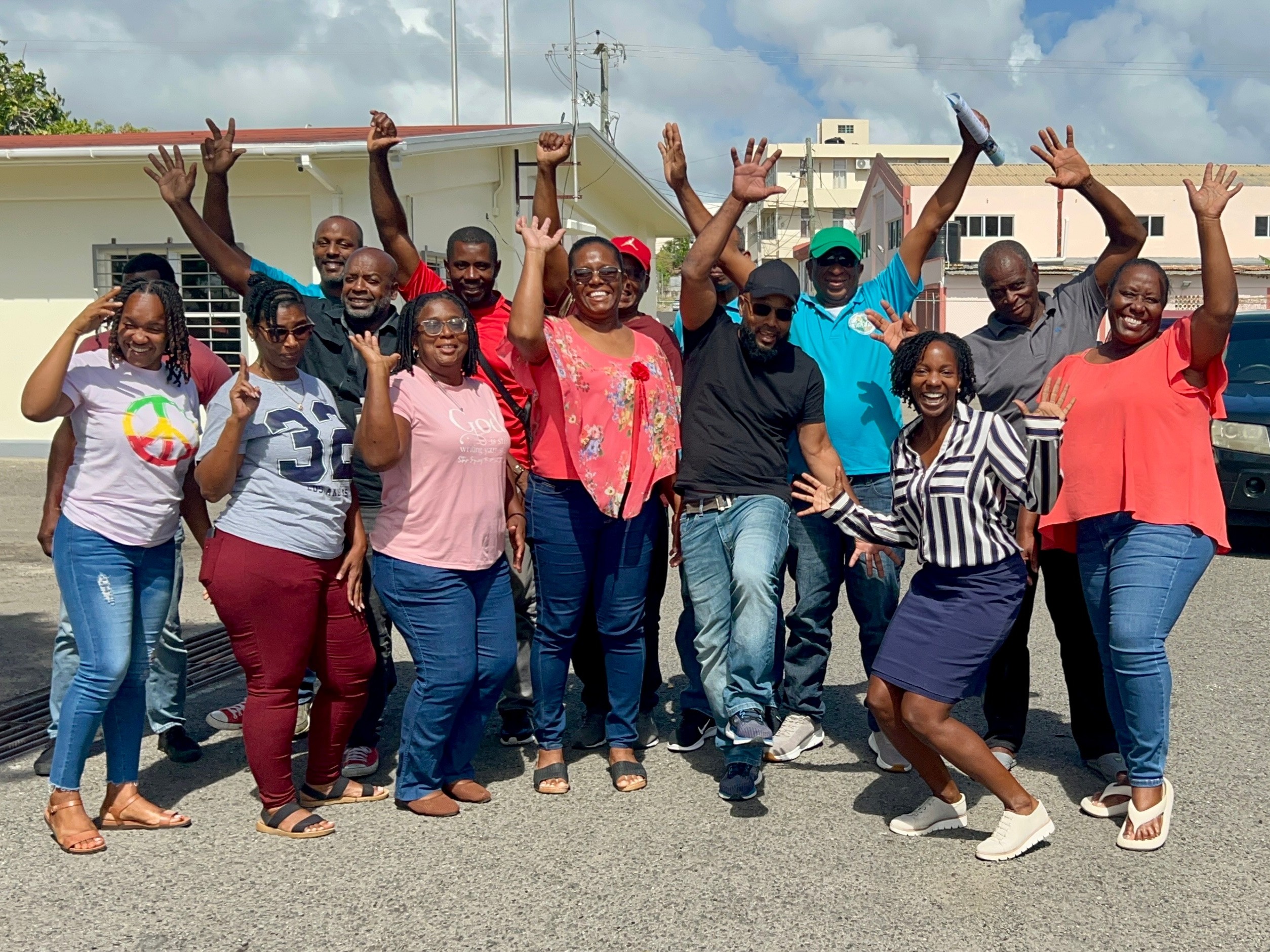
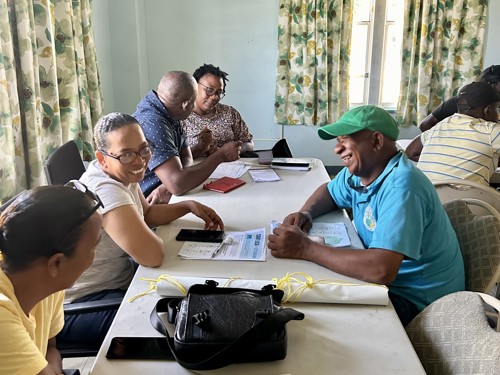
Sea moss farmers and facilitators at the “Adapting to Change: Sea Moss Farming and the National Adaptation Plan (NAP)” workshop - Department of Fisheries, Vieux Fort, Saint Lucia. Credit - Fauna & Flora.
Growing a climate-resilient sea moss industry with Saint Lucia's farmers
Building climate resilience in the sea moss industry
Sea moss farming in Saint Lucia is highly dependent on stable coastal and marine conditions. Rising sea temperatures, changes in rainfall patterns, declining water quality, stronger storm surges, and increasing sargassum influxes directly affect growth rates, product quality, and income stability. For small-scale farmers, these changes are already being felt.
Vincent ‘Jeg’ Clarke, of Aupicon Agriculture and Seamoss Producers, is seeing these changes. “The rainy season (June to November) is our more productive season for farming sea moss. However, it coincides with the hurricane season, which is becoming more and more active with stronger storms and rougher seas.”
Sea moss farming is one of Saint Lucia’s most important coastal livelihoods, supporting economic activity across the sea moss value chain, particularly along the southeast coast where the project’s pilot sites – the island’s two largest sea moss farming areas – are situated.
Under the project ‘Developing sustainable sea moss farming methods in Saint Lucia’, implemented by Fauna & Flora in collaboration with national partners and local farmers, climate resilience is being embedded into the sea moss sector.
A two-part workshop titled Adapting to Change: Sea Moss Farming and the National Adaptation Plan (NAP), was organised by the Eau Piquant Seamoss Farmers Association (ESFA), with funding from the Caribbean Natural Resources Institute (CANARI) and technical expertise provided by Fauna & Flora. In the workshop, 30 farmers (22 men and 8 women) examined the specific climate risks affecting the sea moss value chain. In collaboration with the Department of Sustainable Development and the Department of Fisheries, participants reviewed Saint Lucia’s National Adaptation Plan and discussed how it applies in practical terms to coastal livelihoods.
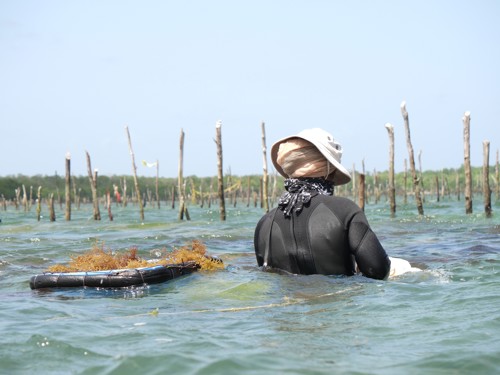
Crucially, the workshop moved beyond awareness-raising. Farmers contributed to the development of draft Standard Operating Procedures (SOPs) for climate adaptation for sea moss farming associations. These SOPs include how to identify risks, how to respond to water quality parameters falling outside safe ranges, guidance on improved farm layout and anchoring systems to mitigate extreme weather impacts, drying practices (including solar drying options), and governance mechanisms to clarify roles and responsibilities during climate-related disruptions.
“We already consider the orientation of our cultivation lines when setting up farms, but we are learning that additional adjustments to the spacing between lines and their position in the water column may be necessary in light of climate change,”
By developing practical, farmer-informed guidance, the project strengthens preparedness, improves coordinated response, and supports faster recovery following extreme events.
“We already consider the orientation of our cultivation lines when setting up farms, but we are learning that additional adjustments to the spacing between lines and their position in the water column may be necessary in light of climate change.”
From climate policy to grassroots action
One challenge has been bridging the gap between national policy frameworks and the lived realities of small-scale farmers. Concepts such as the National Adaptation Plan can appear abstract without deliberate efforts to translate them into something practical for farmers.
Another challenge has been addressing communication gaps between farmers and public agencies, particularly around reporting environmental concerns and clarifying institutional roles during climate-related impacts. The workshop format was designed as an open, knowledge-sharing platform rather than a one-way presentation, and was intentionally structured to surface these issues and begin addressing them collaboratively.
Ensuring that adaptation measures remain economically feasible for farmers is also critical. Discussions therefore included financial risk management options, such as parametric insurance mechanisms to protect livelihoods, alongside farm-level technical improvements.
Feedback from participants indicated that many had previously viewed climate impacts as isolated events rather than part of broader trends. The workshop provided space to connect individual observations such as changing water clarity, increased algae growth, or shifting weather patterns to larger climate processes.
Farmers particularly valued contributing directly to the draft adaptation SOPs. Being part of shaping these guidelines increased their sense of ownership and confidence that the resulting tools reflect real conditions on the coast and at their farms.
“By adhering to clearly defined procedures for farming, harvesting, and handling of sea moss, we ensure protection of not only our income, but also the marine ecosystem that sustains us,” says Brian Walker, Vice President of Eau Piquant Seamoss Association.
Bringing everyone together
The workshop was delivered in collaboration with the Department of Sustainable Development (South East Coast Project) and the Department of Fisheries, strengthening alignment between national adaptation planning and sector-level practice. Government representatives participated in discussions, helping clarify processes and responsibilities.
John Calixte, Project Co-ordinator of the South East Coast Project, says, “The National Adaptation Plan process relies on national consultations, so it is essential that we create spaces where farmers can share their experiences and strengthen their understanding of climate change and its potential impact on sustainable livelihoods. For the sea moss industry, which is one of Saint Lucia’s most important agricultural exports, these discussions are critical to shaping effective adaptation strategies.” -
The project also opened dialogue on environmental accountability and potential private sector engagement in protecting coastal resources. By creating a forum that brings farmers, government, and conservation practitioners together, the project contributes to improving coordination and embedding climate resilience considerations within both policy discussions and business practices.
Embracing adaptive management
Project delivery itself has been affected by an increasingly unpredictable coastal environment. In the summer of 2024, Hurricane Beryl destroyed the project’s in-water test plots, as well as the farms all along the southeast coast of Saint Lucia. Engaging farmers with the project and scheduling field activity has sometimes been challenging due to weather events and increasing sargassum and other algal influxes. Farmers rightly prioritise repairing their farms, collecting dislodged sea moss, and removing entangled algae to minimise losses.
Rather than treating these disruptions as isolated setbacks, the project has used them as learning opportunities. Storm events and sargassum influxes revealed how different farm designs and orientations perform under stress, informing best practice and the development of SOPs. Clear procedures and defined communication channels improve both sector and project resilience during unexpected events and help ensure that project responses reflect farmers’ priorities.
This adaptable approach has strengthened relationships with farmer associations and government departments that collaborate in the management of the industry.
Future climate impacts including rising sea temperatures and sea levels, more intense storms, and continued sargassum influxes could affect the long-term productivity and site suitability of sea moss farming. Climate change related impacts might mean that further support is required for farmers, covering farm design and location, and how and when harvesting takes place.
The design of this project anticipates this uncertainty by prioritising adaptive management. The SOPs under development are intended to be living documents that can evolve as environmental conditions change and be owned and reviewed by the people who work within them.
While the project is primarily focused on adaptation rather than mitigation, sustainable sea moss farming contributes to maintaining healthy coastal ecosystems. By promoting responsible practices and environmental accountability, the project supports marine ecosystem health, which plays a role in broader climate change mitigation.
At its heart, the project tries to ensure climate resilience is not treated as a separate activity but as an integral component of strengthening Saint Lucia’s sea moss sector. By working with and through farmers, government, and other sectors, we can support the health and resilience of coastal ecosystems and protect the livelihoods that depend on it.
Written by Jack Plumb, Bianca Young, and Sophie Allen. For more information on this Darwin Initiative Main project 30-009, led by Fauna & Flora, click here.