 Back
Back
Reducing dependency on river resources
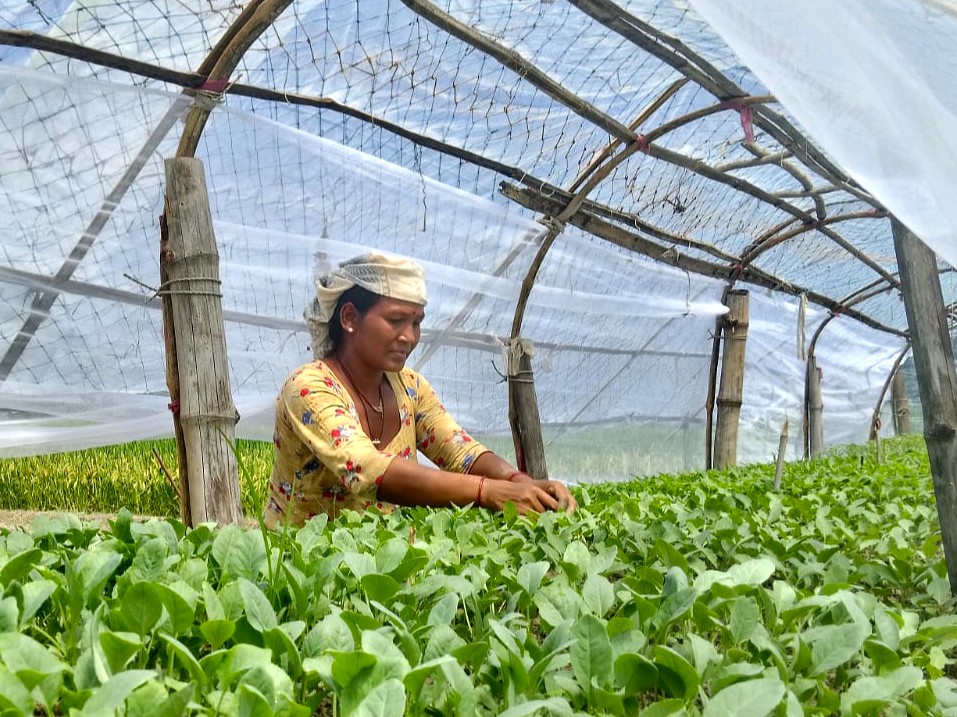
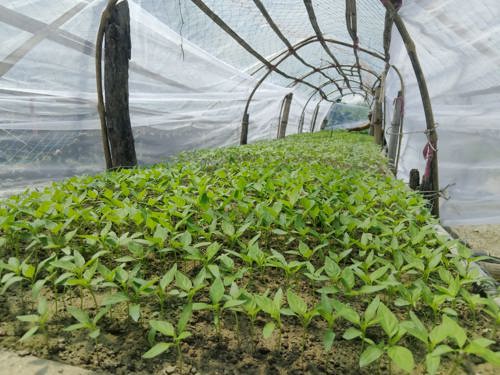
Indrayani Chaudhary with vegetable seedlings. Credit - Sarada Sonaha / FKWDF.
Where there is a will, there is a way: Safeguarding the Karnali River Basin in the face of
climate change
The Karnali River Basin is one of Nepal’s largest and most ecologically intact river systems. Flowing from the high Himalayas to the fertile plains, it connects mountains, forests, wetlands, and floodplains, supporting extraordinary biodiversity and millions of people.
This river system naturally regulates floods, replenishes soils, and sustains fisheries and farmland. However, rising temperatures, shifting rainfall patterns, more frequent droughts and floods, and diminishing snow cover are reshaping the basin. These changes are already affecting water availability, agriculture, and the livelihoods of river-dependent communities who rely on the Karnali for farming, fishing, and daily survival.
For families living along its banks, climate change is not a distant concept; it is a lived reality. Stronger monsoons and erratic rainfall wash away crops. Prolonged flooding destroys fields just as harvest season approaches. Food security, income, and stability hang in the balance.
That is why building resilience sits at the heart of our river co-management approach under the project ‘Strengthening Communities’ Livelihood and Stewardship to Conserve Otters in Karnali’.
In Karnali, the river is both provider and challenger. It blesses communities with fertile soil and abundant water. Yet during the monsoon, it can unleash devastating floods - submerging homes, sweeping away months of hard work, and deepening vulnerability.
Our approach bridges conservation and community resilience. By strengthening climate-smart livelihoods, promoting sustainable resource use, and fostering local stewardship of river ecosystems, the project ensures that both people and nature are better prepared for a changing climate.
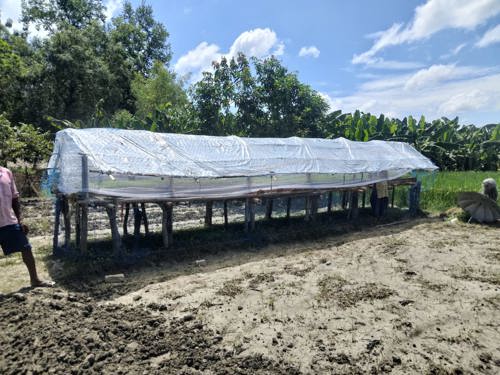 Vegetable farm during the inundation. Credit - Sarada Sonaha / FKWDF.
Strengthening resilience on the ground
During the monsoon, Indrayani Chaudhary, of Tikapur–8, Kailali, faced repeated crop losses as floodwaters submerged her farmland, destroying vegetables and cash crops such as rice and maize. With training and input support from the project, she adopted raised bed farming, elevating soil above ground level to reduce waterlogging. Even when her fields flooded, her seedlings remained protected and productive. This simple yet effective adaptation has significantly reduced plant mortality and helped secure food for her family during the most vulnerable season.
Small change for bigger impact
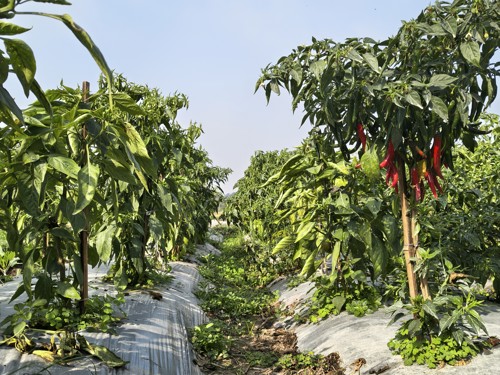
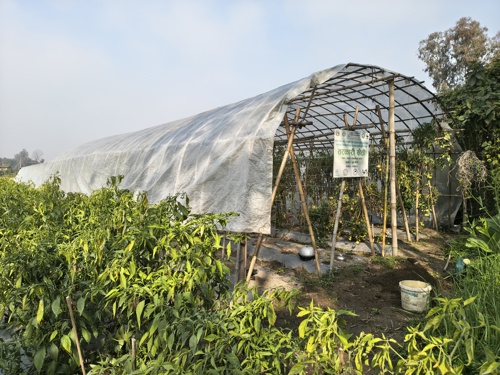
Similarly, Sudha Chaudhary, from Geruwa-3, Bardiya, has adapted to changing weather conditions through the implementation of climate-smart practices. She uses a plastic tunnel to grow off-season vegetables, protecting her crops from heavy rain and temperature extremes. This allows her to harvest vegetables when market supply is low, grow produce regularly, as well in turn increasing household income.
What began as a 766 m² trial-and-error plot has now expanded to a 2,681 m² plot. Last year she harvested 450 kg of chili, and this year she has already produced 700 kg in mid-season. Last year, one of her chili plants produced an impressive 17 kg, earning her the title of Best Farmer from Geruwa Municipality.
“People often ask me about the quality of the seeds and the fertiliser I use. My answer is simple — I use bio-fertiliser produced on my own farm."
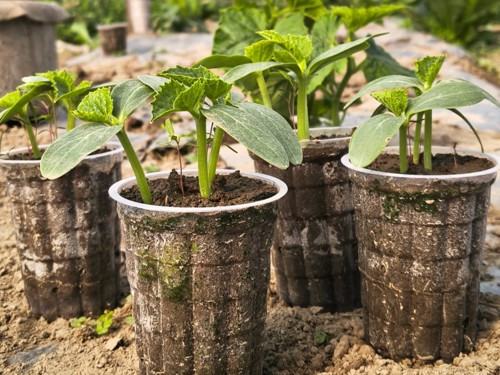
Sudha says, “People often ask me about the quality of the seeds and the fertiliser I use. My answer is simple — I use bio-fertiliser produced on my own farm.” She also proudly shares that she has successfully grown capsicum, a crop that was not previously cultivated locally. Sudha also reuses plastic cups to grow saplings, reducing waste while lowering production costs. Her success has inspired neighbouring farmers, who have started to ask for her advice on improving their own farms.
Her success has inspired neighbouring farmers, who have started to ask for her advice on improving their own farms.
By strengthening household resilience through crop diversification, flood-resilient farming techniques, and reduced reliance on unsustainable river resource extraction and overfishing, this project aims to safeguard sustainable livelihoods and food security by reducing dependency on river resources. The health of the river and the wellbeing of people are inseparable; what sustains one ultimately sustains the other.
Stories from Sudha and Indrayani show how communities are not just surviving, but thriving, securing lasting impact through small yet meaningful changes. Most importantly, when communities gain skills and confidence, and diversify their incomes, they feel better prepared for climate uncertainty.
Written by Aashish Kapali, WWF Nepal. For more information on this Darwin Initiative Main project 30-017, led by Worldwide Fund for Nature (WWF) - UK, click here.