 Back
Back
Recipes for resilience
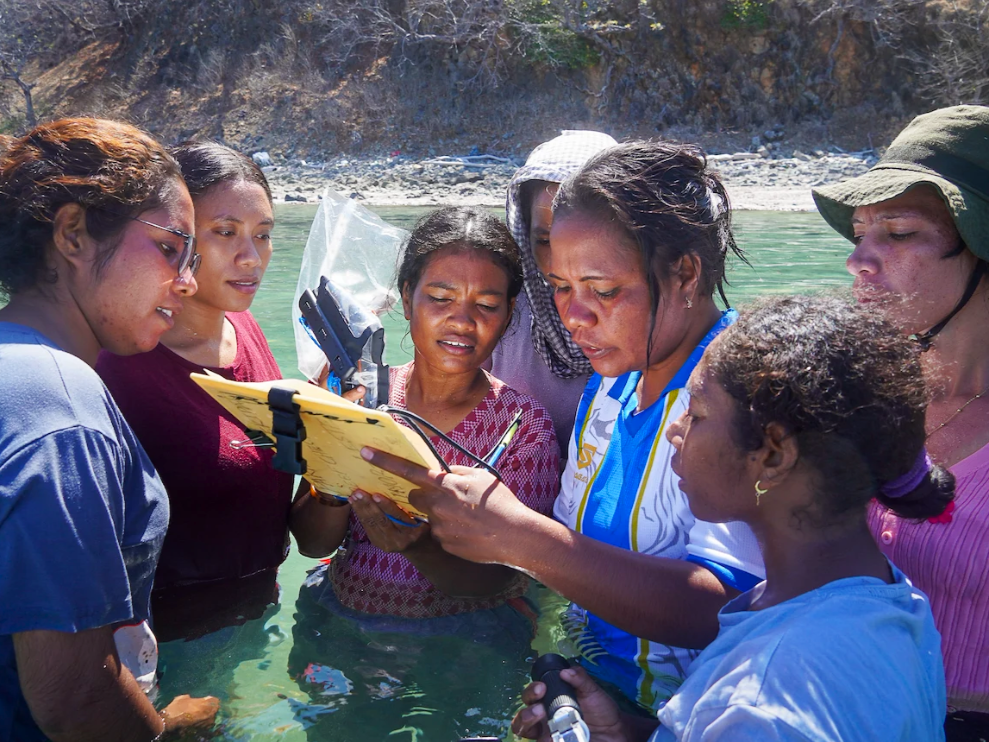
Community members from women-led monitoring groups assess the ecosystem in Timor-Leste. Credit – Alex Bartlett, Nelson Amaral, Dedy Martins, Emilio de la Rosa, Ricardo Valente, Blue Ventures.
Communities in Timor-Leste build resilience through secured food systems
Women are taking the lead to strengthen livelihoods in their communities, creating recipes that build resilience from increasingly unpredictable climate impacts.
Living by the sea doesn’t necessarily translate to an abundance of food. Coastal communities in Timor-Leste, whose livelihoods and food security are underpinned by fisheries, are already experiencing the impacts of climate change.
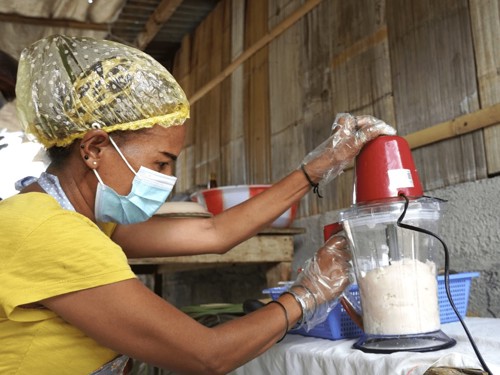
Proactively tackling this are women in fishing communities along the country’s coast, who have innovated ways to transform local catches into tasty, handmade fish balls — reviving their food supply, nourishing their community, and strengthening the local economy, one bite at a time.
Timor-Leste is nestled at the heart of the Coral Triangle, home to the world’s highest levels of marine biodiversity. Despite an abundance of ocean life, communities in the region face persistent challenges with the growing impacts of climate change: seasonal fluctuations in catch, floods, erosion, and extreme weather such as tropical cyclones. These increasingly common events threaten community livelihoods right the way down to household incomes and nutritional needs, and the erosion of ecosystem services essential for people to adapt to climate change further exacerbates their vulnerability to climate risks.
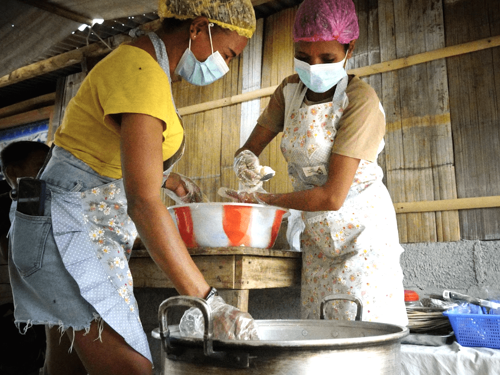
To safeguard their future, communities are turning to local solutions, reviving a traditional customary law called Tara Bandu to steward their coastal ecosystems. With technical guidance from Blue Ventures, four communities on the northern coastline and Atauro island have established Locally Managed Marine Areas (LMMAs) to protect their climate-vulnerable shorelines. Through the LMMAs, local people lead decision-making for fisheries management and protect ecosystems that are crucial for coastal defence. Their LMMAs include critical areas of mangroves, seagrasses, and coral reefs, vital for climate adaptation. These habitats provide a wide range of ecosystem goods and services: they act as carbon sinks (essential for climate change mitigation), nursery areas (fundamental for fish and shellfish stocks), and barriers against storm surges (and flooding caused by storm events).
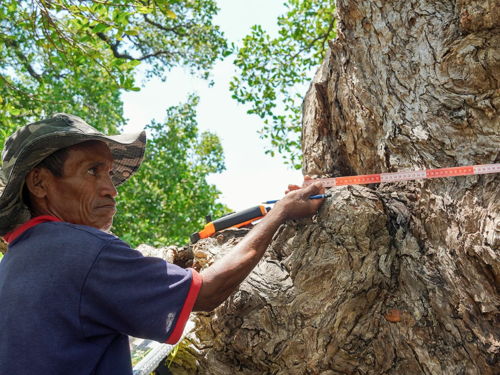
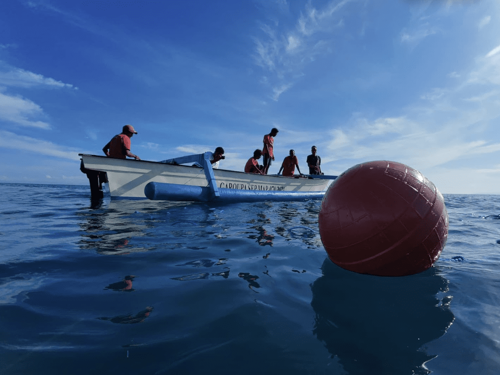
During the project, over 400 ha of coastal seas have come under effective legally-recognised community stewardship, increasing ecological resilience to the impacts of climate change. Mapping and ecological monitoring of the ecosystems has been carried out by the communities, measuring catch diversity, fisheries productivity, and habitat quality. The findings are shared back with community leaders, fishers, and government representatives at data-sharing meetings, and enable the community to track recovery of climate-buffering habitats.
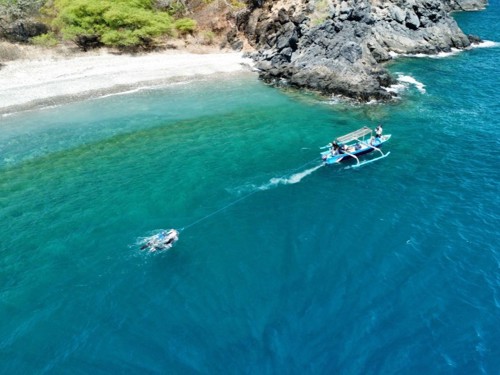
But while the sea is gradually recovering, community livelihoods on the shore remain vulnerable to fluctuations in food productivity. Unpredictable catch, spoilage, and loss were cause for concern for family nutrition and income. To address this, a group of Timorese women decided to explore seafood product diversification to strengthen their livelihoods and economic resilience.
They began experimenting with local fish, turning it into nutritious and tasty fish balls that could be eaten at home or sold for additional income. Their produce quickly gained attention, and such excitement was not without reason: in Timor-Leste, fish balls are a rarity, and these ones were locally made and unlike anything else found in the country. The group’s creativity reached a national stage in the capital city at a government Ocean Fair in 2025. Their livelihood diversification was supported through seafood processing training provided in collaboration with the Ministry of Agriculture, Livestock, Fisheries, and Forestry. These high-level endorsements are a powerful example of what communities can accomplish when the right support and opportunities are unlocked.
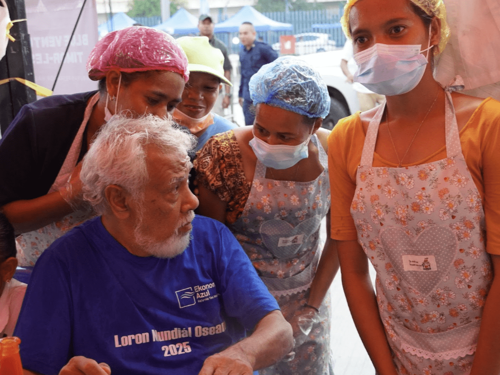
The true success lies in what is quietly taking root behind the scenes. With income from their new activities, women are beginning to reinvest in their families and are able to save through community-based savings and loan groups, providing a financial buffer for periods of catch and income fluctuation. This improved security of food, income, and financial mechanisms is strengthening community capacity to adapt to climate and fisheries shocks. With every fish ball made and sold, they are laying the foundation for a healthier, more self-reliant future. Greater adaptability and security, especially in the face of environmental degradation, extreme weather, and market uncertainty, means their work is not only about what is on the table today, but also about what becomes possible for generations to come.
What’s more, women are taking on new roles as providers and decision makers in the community, improving their financial independence, contributing to long-term economic stability, and participating in management roles. Women make up more than 90% of the community-based fisheries monitoring groups, and equipped with data collection training and tools, they monitor fish stocks, habitat health, and resilience indicators – evidence used to guide adaptive decisions for the management of their LMMAs.
Through safeguarding livelihoods, strengthening food systems, and rebuilding the fish populations that sustain them, communities have the tools and capacities to adapt to coming changes, and are better prepared for climate‑related challenges. This is community-powered climate action.
Written by Ricardo Valente and Elizabeth Nevin. For more information on this Darwin Initiative Main project 30-027, led by Blue Ventures, click here.