 Back
Back
Value chains and climate change
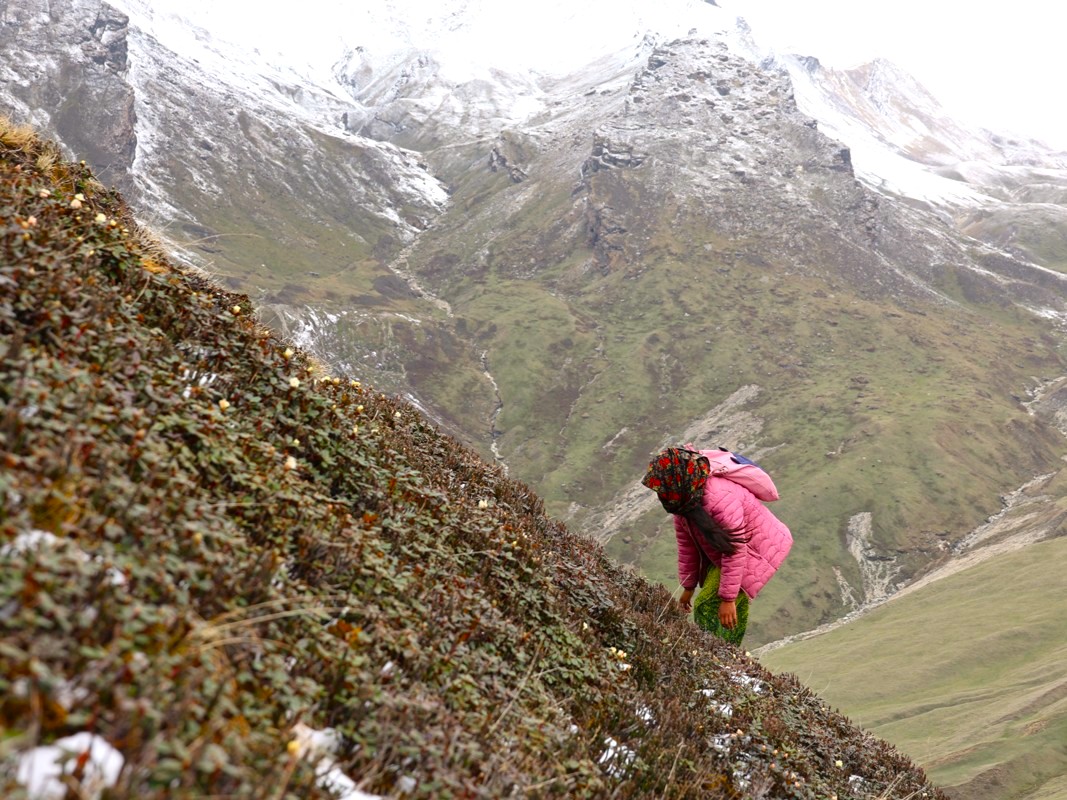
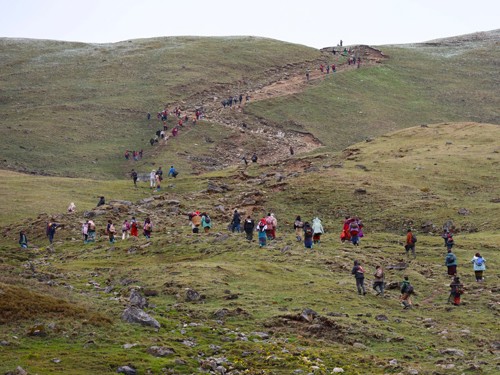
Searching for Yarsha (Yarsagumba) is not easy. Credit – Sushil Mainali, ANSAB.
Nepal's high-altitude gold: Protecting pastures and the livelihoods of Yarsagumba collectors
Each May, Pranisha Pun and Amrimaya Pun leave Maikot village in western Nepal for a two-day trek into the high-altitude pastures of the Dhorpatan Hunting Reserve. Their goal: to harvest Yarsagumba (Ophiocordyceps sinensis), a rare caterpillar fungus known as “Himalayan gold”. The harvest of Yarsagumba is a critical annual trek for communities living in the Himalayan region of Western Nepal, providing the main source of cash income from this rare fungus highly valued in traditional medicine.
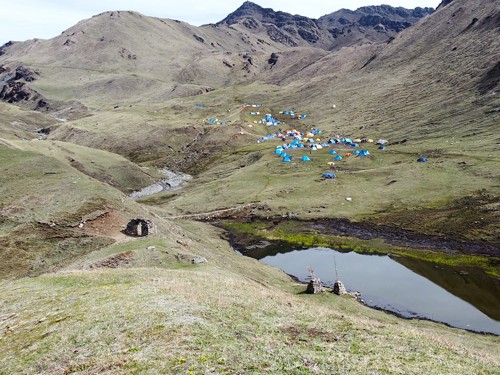
At around 4,000 m, harvesters set up temporary camps and begin daily climbs to even higher elevations. The hunt is a test of endurance; thin air, freezing temperatures, and steep terrain make each step a challenge. These high-altitude conditions are increasingly unpredictable, where unusual weather, such as unseasonal heavy snow or early monsoon rain, can slow down harvesting and disrupt project activities. As they climb, they pause at stone shrines in Deurali to pray for luck.
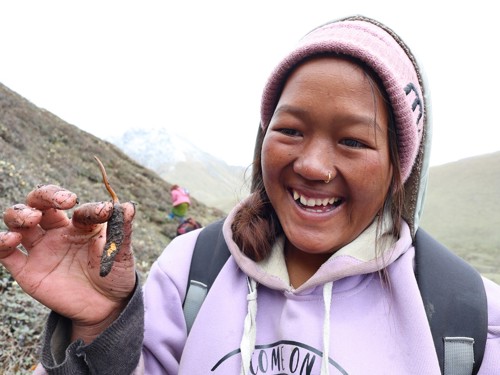
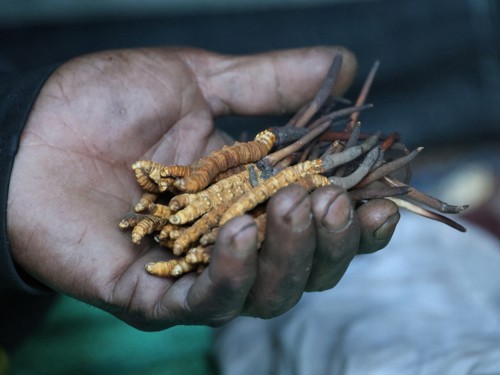
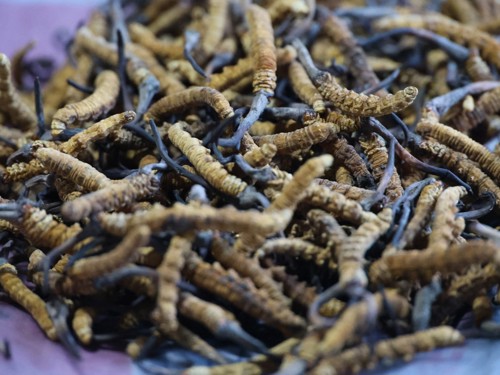
The fungus is identified by a tiny mushroom tip poking through the soil, and spotting one is a moment of shared joy. For a long time Yarsagumba has been a highly prized ingredient in traditional Chinese medicine, and there is growing evidence that it could help assist the immune system, be beneficial for gut-health, and have antioxidant properties.
The value of each find depends on its size and colour, with larger, golden-yellowish specimens fetching higher prices. But the search is unpredictable. “Sometimes you don’t find even one in a day,” says Amrimaya. “Other times, you might find fifteen or sixteen.”
Despite the extreme conditions and unpredictable search, the income from Yarsagumba is vital to sustain livelihoods. To combat challenges like environmental disturbance and disruption during harvest, illegal trade, and low returns, TRAFFIC's ‘Scaling Conservation of Himalayan Plants and Fungi’ project focuses on establishing equitable and traceable supply chains. This ensures harvesters receive a fairer financial benefit from their sustainable resource management as well as having the tools and skills to safeguard their biodiversity and adapt to environmental challenges - including in a changing climate.
There is a lot at stake: the quantities of Yarsagumba gathered during just a few weeks in the harsh mountaintop pastures determine outcomes for entire households for the rest of the year. It's also a financial buffer that helps harvesters when climate shifts lead to declines in agricultural production. The money earned from Yarsagumba primarily goes toward food, education, and religious donations. Religious giving, part of a local ‘economy of merit’, boosts social status and community bonds.
Despite the severe conditions, the resilience of these communities is striking. One staff member from ANSAB Nepal, a project partner working on the ground to promote sustainable harvesting, recalled seeing women in traditional Saree playing volleyball at 4,300 m, a testament to their strength and spirit.
However, challenges remain. A lack of legal awareness means even experienced Non-Timber Forest Products (NTFP) traders, like those that collect and trade Yarsagumba, may be unaware of restrictions within protected areas. This can lead to traders, if caught in restricted areas, being permanently barred from harvesting and forced to abandon their livelihoods. Another concern is the decline of invaluable traditional medicinal knowledge, as younger generations increasingly migrate away from the highlands.
Looking ahead, climate change is expected to further reduce availability by altering the distribution range of Yarsagumba. Both scientific literature and local harvesters emphasise that consistent snowfall is essential for its growth; without sufficient snow cover, the fungus fails to develop. Furthermore, changing weather patterns threaten the sensitive high-altitude meadows, while more frequent extreme weather events compromise the safety of those travelling in these remote areas. To manage these risks, harvesters work with ANSAB Nepal to build safety awareness, ensuring they can navigate the changing environment securely.
Local communities, for their part, have begun to address some of these issues: they are forming their own trader groups to facilitate legal trade and negotiate better prices.
The project, led by TRAFFIC and partners including ANSAB Nepal, Federation of Community Forestry Users Nepal (FECOFUN), WWF India, University of Copenhagen (UCPH), University of Oxford, Tribhuvan University and FairWild Foundation, is directly tackling the underlying pressures on both people and nature. The project works with a network of Community Forest User Groups (CFUGs) across Nepal’s Himalayas to strengthen their capacity for sustainable resource management, including their ability to adapt to the future challenges resulting from a changing climate. By investing in resource inventory and monitoring capacity through this project, more than 100,000 ha of carbon-rich high-altitude pastures will be protected.
The project's strategy moves beyond local harvesting to drive change across the international supply chains in markets like China and Hong Kong, areas that drive most of the demand for Yarsagumba.
“The core goal is to establish traceable and equitable supply chains for wild harvested NTFPs, thereby ensuring a greater, fairer return reaches the harvesters for livelihood improvement. This initiative strengthens the value chain from the mountains of Nepal through training local producer companies and harvesters on sustainable resource management, implementing pilot traceability systems to secure legal trade, facilitating adoption of sustainability standards such as FairWild certification, and organising matchmaking events to connect local producers with responsible international buyers.”
Bryony Morgan - Senior Programme Manager – Himalayan NTFPs.
For now, the villagers continue their annual pilgrimage, balancing tradition with modern pressures. Each tiny fungus they find carries the hope of another year of survival — and the preservation of a way of life deeply rooted in the mountains.
Written by Bryony Morgan, Puspa Lal Ghimire, and Dipesh Pyakurel. For more information on this Darwin Initiative Extra project DAREX012, led by TRAFFIC International, click here.