 Back
Back
Rangers confront the climate crisis
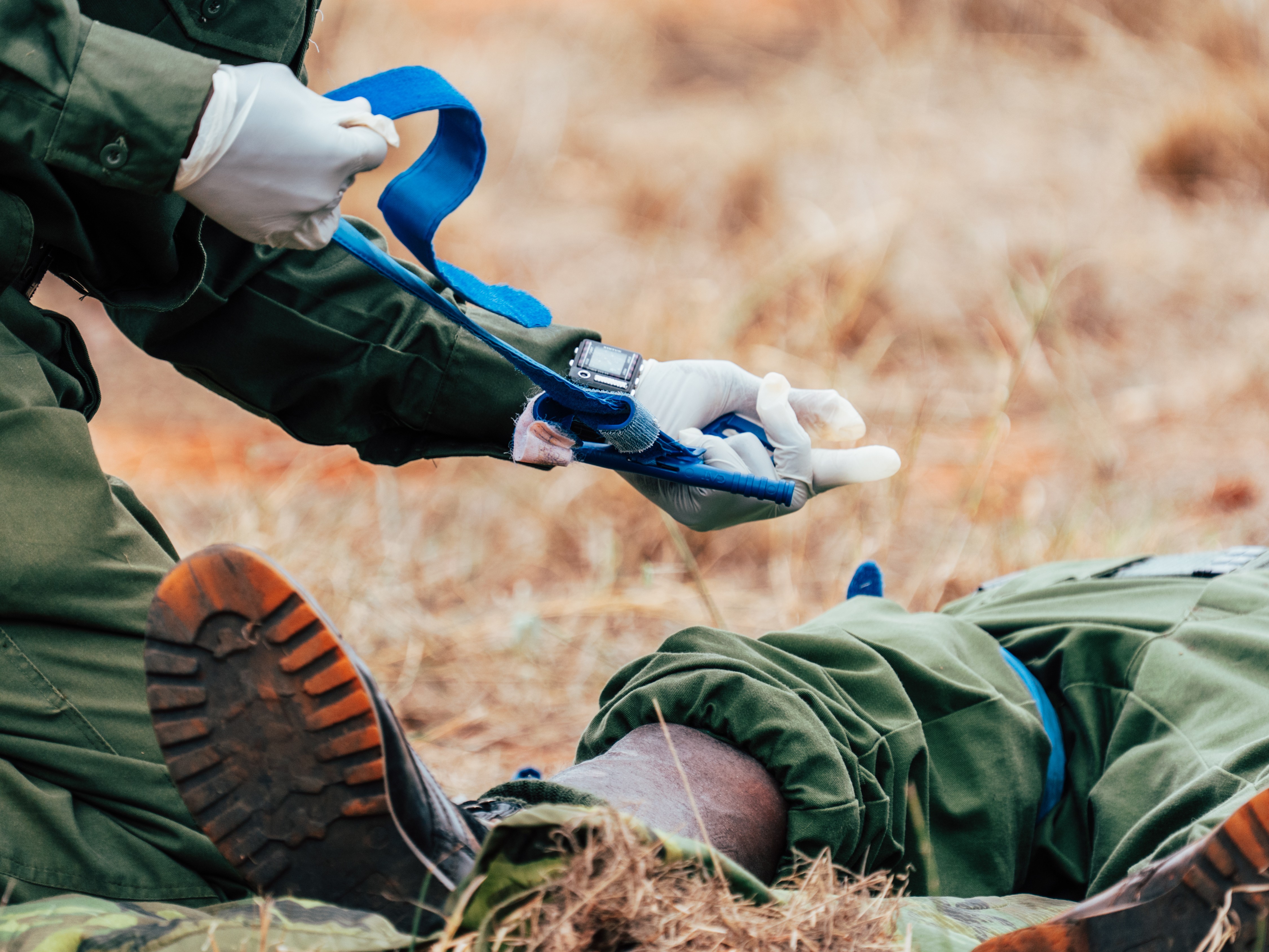
Rangers participating in a First Aid emergency scenario, one of the modules of LEAD Ranger training in East Africa. Credit - LEAD Conservation.
Nature’s taskforce: How rangers protect and monitor natural climate solutions
Rangers stand on the front line of the climate emergency. Every day they witness the accelerating impacts of rising temperatures, extreme weather events, biodiversity loss, and environmental degradation. Yet they are far more than observers of change — they are central actors in the global response. By protecting landscapes, forests, coastlines, and marine environments, rangers help preserve the natural systems that regulate the planet’s climate and sustain life. Their work helps buy humanity precious time to confront the climate crisis and safeguard the Earth for future generations.
A skilled ranger workforce is an essential global resource to mitigate the effects of climate change. The Thin Green Line Foundation works to strengthen ranger teams around the world, particularly those operating with limited resources. Intensive training in life-saving first aid techniques, along with other essential skills for ranger teams are making a critical difference. From 2024 to 2025, the Thin Green Line and its partners funded a comprehensive train-the-trainer programme for over 100 rangers across seven African nations.
Skilled ranger teams are instrumental to the growing use of Nature-based Solutions. Defined by the International Union for Conservation of Nature as actions that protect, sustainably manage, and restore ecosystems, Nature-based Solutions address fundamental challenges facing communities while benefiting both people and biodiversity. These approaches are increasingly recognised as one of the most powerful tools available to address climate change. The World Resources Institute (WRI) has described Nature-based Solutions as ‘super solutions’, among the most cost-effective, rapid, and widely accessible strategies available. Research by WRI suggests that such solutions could deliver up to one-third of the emissions reductions needed to meet the goals of the Paris Agreement.
These solutions are not theoretical — they are practical and proven. Protecting wetlands can reduce flood risks, secure clean water supplies, and provide vital habitat for wildlife. Restoring mangroves helps shield coastlines from erosion and storm surges, supports fisheries by providing breeding grounds, and captures large quantities of carbon. Across forests, grasslands, coral reefs, and river systems, healthy ecosystems act as natural climate regulators. They absorb and store greenhouse gases while strengthening the resilience of communities and landscapes to environmental shocks.
Rangers are indispensable to making these solutions work. Clean air, safe water, reliable food systems, and climate stability all depend on healthy ecosystems. By protecting biodiversity, rangers help maintain the balance that allows these systems to function. They also defend natural areas from illegal logging, land clearing, wildlife poaching, overgrazing, and pollution. Without their presence and vigilance, many natural climate solutions would simply collapse under human pressure.
Clean air, safe water, reliable food systems, and climate stability all depend on healthy ecosystems. By protecting biodiversity, rangers help maintain the balance that allows these systems to function.
The role of ranger teams is also critical to achieving global conservation goals, including the United Nations’ ambition to protect 30 % of the planet’s land and oceans by 2030, often referred to as the ‘30 by 30’ target. Rangers work in some of the most challenging environments on Earth, from remote wildernesses and Indigenous territories, to coastal ecosystems and urban reserves. To carry out their responsibilities effectively and safely, rangers require proper training, reliable equipment, and sustained operational support.
Thin Green Line’s philosophy is not to lead from the front, but to stand beside rangers and empower them to lead within their own communities. In 2025, the LEAD Ranger Train-the-Trainer programme included 89 participants, including 15 women:
- Two Instructor courses (Zambia and Zimbabwe) — 29 learners, including 3 women.
- One Training Coordinator course (Kenya) — 9 learners (1 woman).
- One Refresher Course (Kenya) — 26 learners (5 women).
- Two Mentoring sessions (Zimbabwe and Kenya) — 25 learners (6 women).
According to Programme Leader Dominique Noome, "2025 was the toughest year we have had, but our small team just kept going. We have really seen the power of the train-the-trainer model, focused effort, and strong partnerships... We’re ready to make 2026 our strongest year yet for conservation.”
"We have really seen the power of the train-the-trainer model, focused effort, and strong partnerships."
Whether responding to wildfires, floods, or storms, rangers play a vital role in monitoring environmental change. They gather field data that informs scientists and decision-makers, help develop management strategies, and lead efforts to conserve, rehabilitate, and restore ecosystems.
With stronger global support, rangers can continue to expand their impact — protecting the natural systems that sustain humanity and strengthening the planet’s resilience in the face of climate change.
Written by Nick Besley. For more information on investing in Nature-based Solutions through rangers, click here. For more information on this Darwin Initiative Capability & Capacity project DARCC049, led by The Thin Green Line Foundation, click here.