 Back
Back
Caring for the lungs of our planet
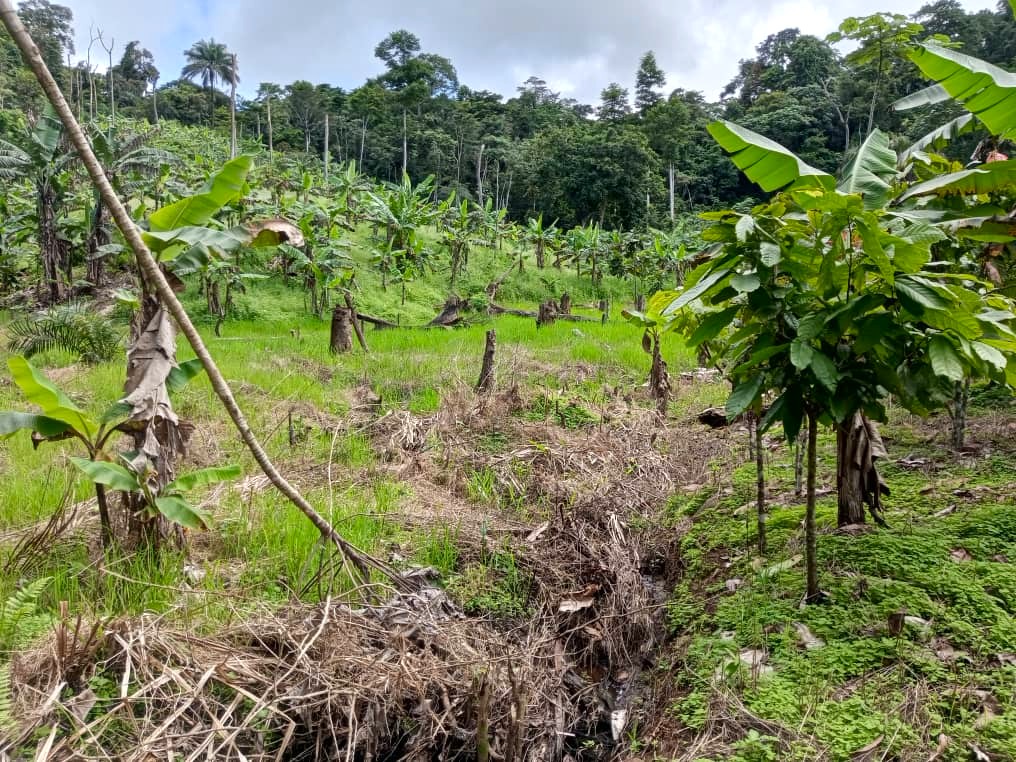
Community land bordering the Mont Bero Forest. Credit – Guinée Ecologie.
How community-led forest conservation is fighting climate change in Guinea
The Mount Bero Classified Forest, part of the montane forests of Guinea that extends over areas of Sierra Leone, Liberia, and Côte d'Ivoire, covers about 26,850 ha. The forest is very biodiverse, home to the Pygmy hippopotamus (Choeropsis liberiensis), Western chimpanzee (Pan troglodytes verus), and more than 88 species of birds, including the Copper-tailed starling (Hylopsar cupreocauda), Palm-nut vulture (Gypohierax angolensis), and Western long-tailed hornbill (Horizocerus albocristatus), among others.
Additionally, more than 25 villages depend on the forest for their livelihoods, highlighting its importance. However, in recent decades, the forest has come under increasing pressure from deforestation, illegal logging, and land encroachment. Since 2024, Guinea Ecology (GE), in collaboration with BirdLife International and the N'Zérékore Forest Center, has been carrying out a project to restore degraded areas of the forest. The project aims to restore approximately 100 ha of degraded forest.
Collaboration with local communities is key in this restoration initiative. As a result, more than 150 community members from the 25 villages, 30% of whom are women, have been mobilised to participate in the implementation of the project, through village committees.
To date, more than 75 ha of degraded forest have been restored, with endemic tree species such as African walnut (Lovoa trichilioides) and Sapele (Entadrophragma cylindricum), all adapted to the Mont Béro ecosystem.
"Collective action to conserve biodiversity is the key to preserving our forests. Every tree planted is a commitment to biodiversity and climate resilience," notes Mamadou Diawara, Executive Director of GE.
"Collective action to conserve biodiversity is the key to preserving our forests. Every tree planted is a commitment to biodiversity and climate resilience."
These trees were planted alongside palm and cocoa trees to support restoration while improving livelihoods. In addition, sustainable agricultural practices, including market gardening techniques, organic fertiliser production, and tree nursery management (among others) are being implemented in 10 villages, benefiting approximately 1,500 members of the local community.
The restoration of the Mont Béro forest also contributes significantly to the fight against climate change. Indeed, forests play an essential role in regulating the climate by absorbing carbon dioxide from the atmosphere. By reforesting degraded areas with locally adapted species, communities participate not only in the protection of biodiversity, but also in carbon sequestration, soil stabilisation, and regulation of the water cycle. This community-based approach thus strengthens the resilience of ecosystems and local populations to the effects of climate change, such as rainfall variability, land degradation, and loss of natural resources.
"On reforestation days, the whole village gathers as if for a party: we plant together and protect the young trees from bushfires."
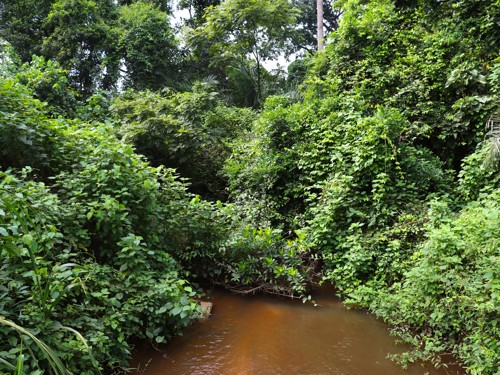
"Today, I am part of the local conservation committee, and I spend my free time replanting trees. I learned how to raise seedlings in nurseries and how to cultivate my field better without encroaching on the forest. On reforestation days, the whole village gathers as if for a party: we plant together and protect the young trees from bushfires," explains Jacques Nema, president of the Laminata group, one of the village groups in the region.
Marcelline Haba, a resident of the village of Kabiéta, stresses the importance of protecting the forest for future generations. "I understood that the Mont Béro forest is our common heritage. It brings us water, keeps the climate cool, and is home to various animals and birds. I now teach my children to be proud stewards of the forest. I know that if we take care of the forest, it will take care of us," Haba notes.
"I now teach my children to be proud stewards of the forest. I know that if we take care of the forest, it will take care of us."
However, restoration efforts have not been without challenges, including an arson that ravaged 10 ha of reforested area in 2024. Despite these obstacles, exchanges at international events such as the United Nations Climate Change Conference (COP 29) in November 2024 helped promote the project's achievements and pave the way for new partnerships.
"Forests are the lungs of our planet and the heart of our ecosystems. Together, let's act for their conservation and sustainable management," concludes Diawara.
Written by Aliou Diallo. For more information on this Darwin Initiative Main project 31-014, led by BirdLife International, click here.
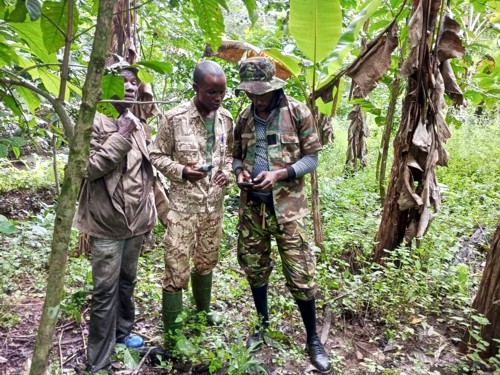 Ministry of Environment conservation agent carrying out patrols to assess environmental impacts and detect potential violations. Credit – Ministry of Environment.
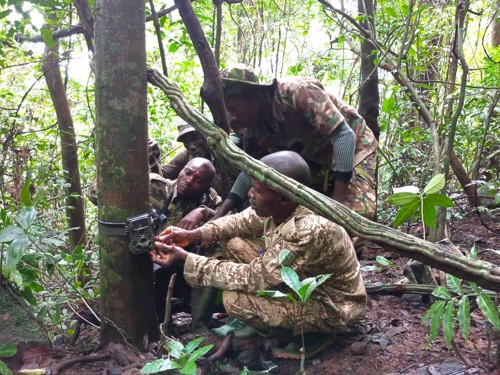 Ministry of Environment conservation officers installing camera trap to monitor wildlife.
 Credit – Guinée Ecologie.