 Back
Back
Highlights from the Seminar Series 2026
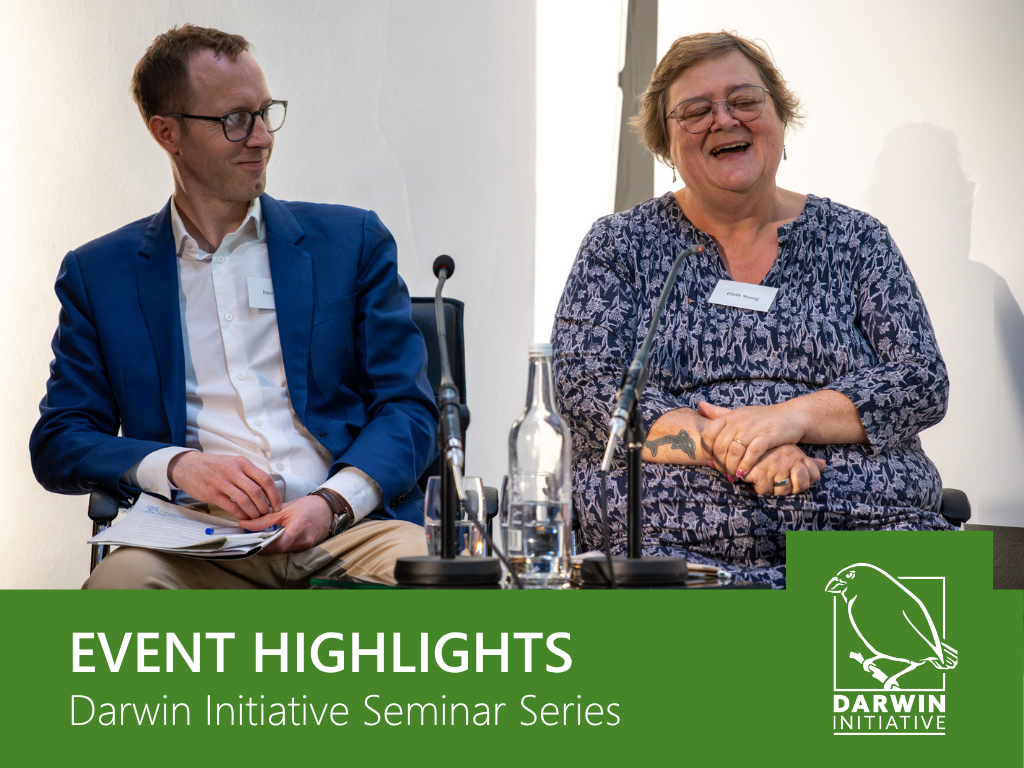
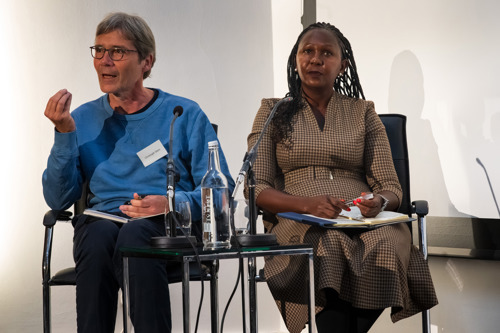
Kevin Seely, Head of the Darwin Initiative in the UK Government, and Eilidh Young, Lead Administrator for the Biodiversity Challenge Funds at NIRAS. Credit – Lance Bellers.
What we learnt from the Darwin Initiative Seminar Series 2026
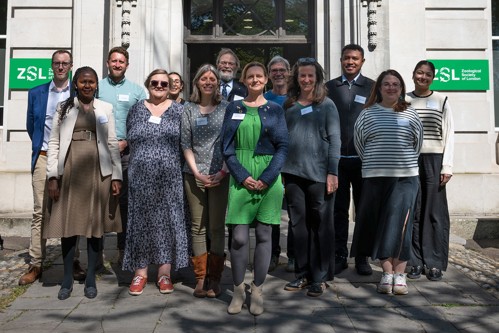
In April 2026, the Darwin Initiative brought together projects past and present, alongside the wider conservation community, for two days of shared learning, reflection, and connection.
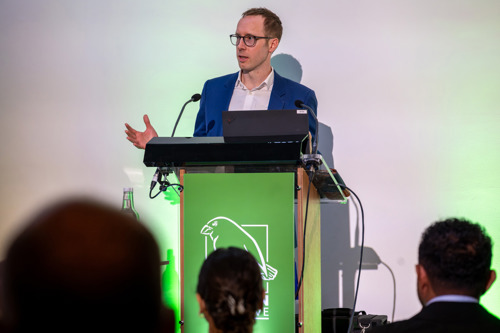
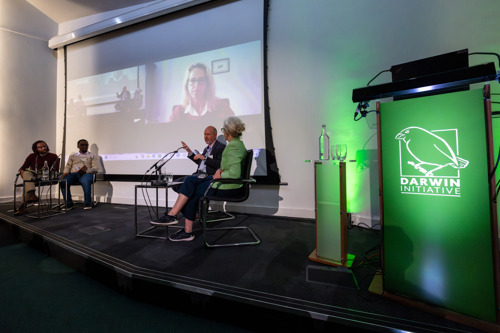
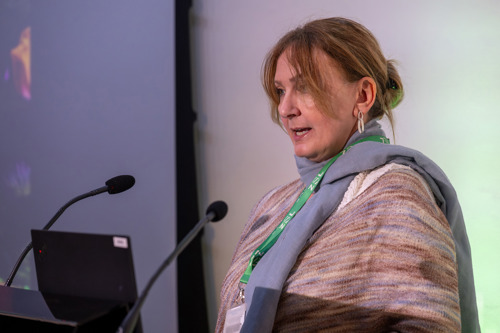
Hosted as a hybrid event at the Zoological Society of London’s Huxley lecture theatre and streamed online for a global audience, the Seminar Series created space for experts from across the sector to share insights. Through practical stories from the field and open discussion, speakers explored what works, what doesn’t, and what it takes to deliver lasting impact.
Structured as four themed sessions over two days, each session combined two project presentations with a chaired panel discussion and time for audience engagement. Speakers brought to life the positive impacts Darwin Initiative projects have had on biodiversity and people, helping draw out both real-world lessons and wider implications from the portfolio.
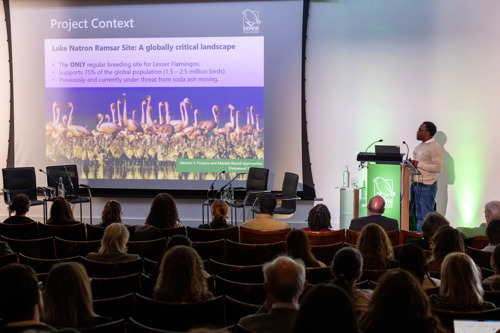
Session 1: Finance and Market-based Approaches - making incentives work in practice
The first session explored practical approaches to livelihoods, market chains, and conservation incentives, with a focus on understanding value-chain legacies and identifying successful market interventions.
Projects working in Tanzania and Ethiopia brought the discussion to life through experiences of developing and sustaining nature-positive enterprises through tourism and Non-Timber Forest Products (NTFPs), showing both the potential of market approaches and the practical barriers teams often face when moving from pilot activity to something durable.
A recurring theme across the presentations was the importance of local ownership - not only as a principle, but as an important condition enabling enterprises to last.
The panel discussion then surfaced two challenges that frequently determine whether market approaches succeed: identifying trade barriers early (so projects don’t build supply without viable routes to market), and ensuring investments feels 'safe' for investors, particularly when engaging private sector finance.
Takeaway: Market-based approaches can unlock benefits for biodiversity and livelihoods, but only when they are designed around real incentives, feasible market pathways, and long-term local ownership.
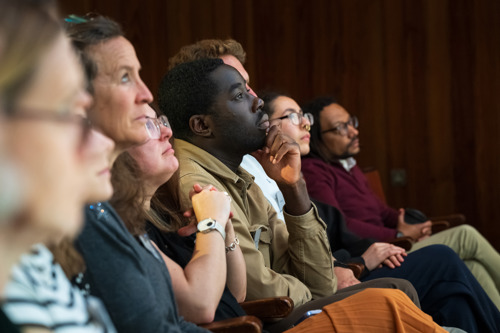
Session 2: Locally Led / Human Rights and Inclusion - beyond participation to power and inclusion
The second session focused on what ‘locally led’ really means in practice, and whether it correlates with project success and legitimacy.
Discussions also covered best practice around free, prior, and informed consent (FPIC), and highlighted challenges projects often encounter. These include rising casework, reputational risk, and the need for capacity-building around community engagement in complex enforcement contexts.
Examples in this session reinforced that locally led work is not simply about participation. Our first project presentation, focused on scaling rights-based approaches in Indonesia, highlighted that communities need tenure rights, institutional capacity, and governance structures that make leadership possible - otherwise ‘locally led’ remains an aspiration rather than a reality.
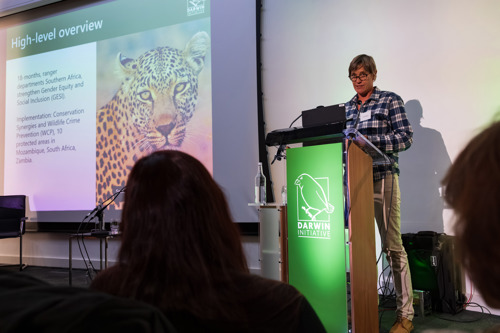
Another contribution, from a project focused on gender equity and social inclusion in southern Africa, emphasised the importance of context‑specific, gender‑sensitive approaches, rooted in the realities experienced by women who work as rangers on the front line of conservation.
Takeaway: Locally led approaches are a process: communities need tenure rights, institutional capacity, and governance structures before they can lead. Projects also need practical tools and confidence to manage associated risks, such as safeguarding, responsibly.
Session 3: Scaling Impact — moving from pilots to policy and systems
Kicking off day two, the ‘Scaling Impact’ session explored how Darwin Initiative projects leave lasting change by scaling activities and engaging with local government and policy, including ‘whole-of-government’ approaches and positive influence beyond individual sites.
A presentation on scaling conservation of Himalayan plants and fungi showed what scaling can look like over time, building on prior work and expanding across landscapes, species, and institutions.
Importantly, scaling was framed not as repetition, but as progression: moving from pilots and testing, through changes in policy, to changes in systems at scale.
The presentation also highlighted enduring impact beyond the original grant, through strengthened market mechanisms, alongside policy contribution through technical support to Nepal’s CITES Act and related regulations.
A second presentation explored scaling through institutional design and incentives in Bolivia, illustrating how it can depend on creating the right architecture bringing together decision-makers, financing, and participation. Another learning was that it is important to ask tough questions about whether an approach is “good enough, big enough, simple enough, and cheap enough” to scale.
Takeaway: Scaling is not automatic. It requires deliberate design, building from pilots into institutions, finance, and policy. It requires being honest about what will (and won’t) travel beyond the original context.
Session 4: Lessons from the Past 30 years — how lasting impact is built over time
The final session reflected on the Darwin Initiative’s evolution over 30 years, and how the fund has adapted to a changing global context while continuing to support on-the-ground conservation.
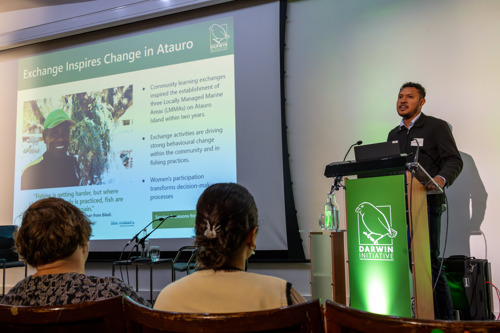
The audience heard stories from two organisations with successive projects supported by the Darwin Initiative, revealing the evolution of these organisations and projects over the years. One project example from Timor-Leste illustrated how long-term progress can be built through linking multiple ‘pillars’ of change: financial resilience, community marine stewardship, and data for decision-making. Progress was driven by linking livelihoods, governance, and data-led decision-making at community level, building of the learnings and legacy of previous pioneering Darwin Initiative projects.
A second presentation from a project in Morocco’s High Atlas showed how scaling can be achieved through strengthening local institutions and networks. Work with rural cooperatives has expanded across a large landscape, supporting hundreds of enterprises and thousands of households, while linking conservation with livelihoods and market access. The project’s approach focused on building capacity, supporting entrepreneurship, and integrating cooperatives into wider systems, including policy and local economies, showing how Darwin Extra projects build on previous lessons and scale.
Scaling was achieved by strengthening local institutions and enabling them to operate within wider economic and policy systems, evidencing the power of projects to achieve systematic change.
Across these examples, the emphasis was not only on outputs, but on what remains when projects end: institutions, skills, partnerships, and approaches that can be carried forward and adapted. Panellists looked back on how conservation has changed over the past three decades, and what has emerged from funding projects during this time: a growing belief in collective action and our ability to change landscapes and systems; a much stronger science and evidence base on which to draw from when funding projects to make the biggest difference; and a shift in approaches that value traditional governance of environmental resources and the importance of GESI.
Takeaway: The legacy of the Darwin Initiative is shown through projects that have built long term relationships, locally rooted institutions, and practical pathways for communities to lead, linking biodiversity outcomes with livelihoods. Looking to the future, it was agreed that there is a growing sense of possibility and ambition with what Darwin Initiative funding can do, to see how investment can change systems across the world, alongside a growing pressure to live up to this ambition and effectively communicate project impacts.
Beyond the sessions - connection, reflection, and shared momentum
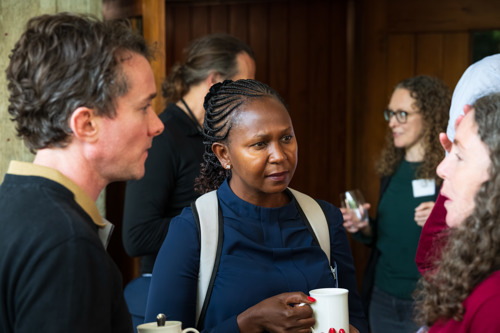
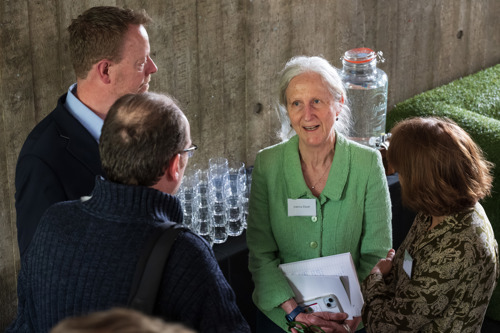
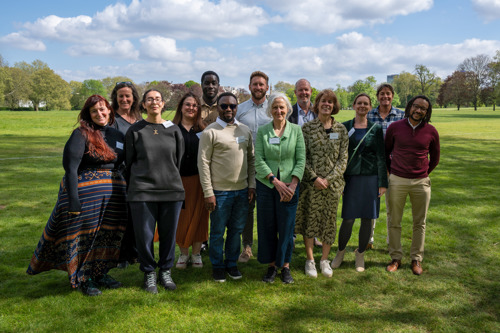
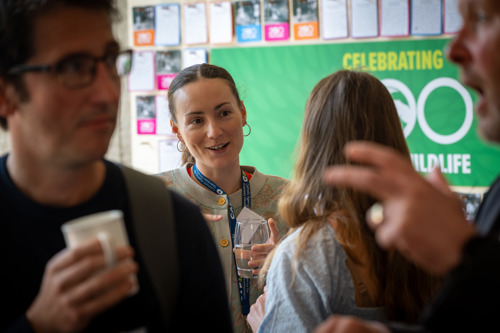
The value of the Seminar Series was not only in the formal presentations. Time between sessions created space for discussion and exchange, allowing participants to connect ideas and reflect on shared challenges. For those attending in person, this included opportunities to meet speakers and build new connections, helping extend learning beyond the event, and an online networking platform allowed attendees around the world to interact and connect
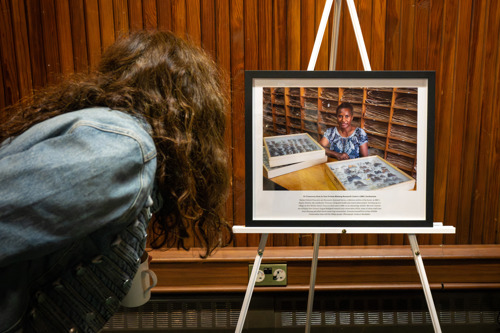
Participants also engaged with a pop-up photography exhibition from the University of Sussex, which highlighted the work of the Darwin Initiative project 'Integrating conservation and health in Papua New Guinea’s vulnerable rainforests'.
Feedback from the event highlighted the relevance of themes, insightful presentations, and the accessibility of the hybrid format. Attendees valued the ability to join online, with many noting the flexibility it provided alongside opportunities for interaction.
As one participant put it: "It made me feel like part of a bigger movement, rather than just implementing an isolated project."
Looking ahead
The 2026 Darwin Initiative Seminar Series showcased the incredible breadth of the portfolio and reinforced the value of shared learning across the community. Bringing together practical experience, reflection, and discussion, the event highlighted how projects can learn from one another and strengthen impact over time.
Recordings and session materials are available via the Darwin Initiative Workshops and Webinars resources page, ensuring that those unable to attend can still benefit from the insights shared. The full agenda and speaker line-up can be further explored in the official Seminar Series overview.
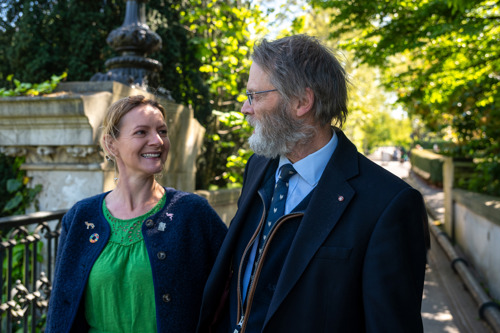
A huge thank you goes to our speakers and all those who attended in-person and online.
To be the first to hear about future funding rounds of the Darwin Initiative, sign up to the mailing list here.
Credit – Lance Bellers.