 Back
Back
Training the next generation of botanists
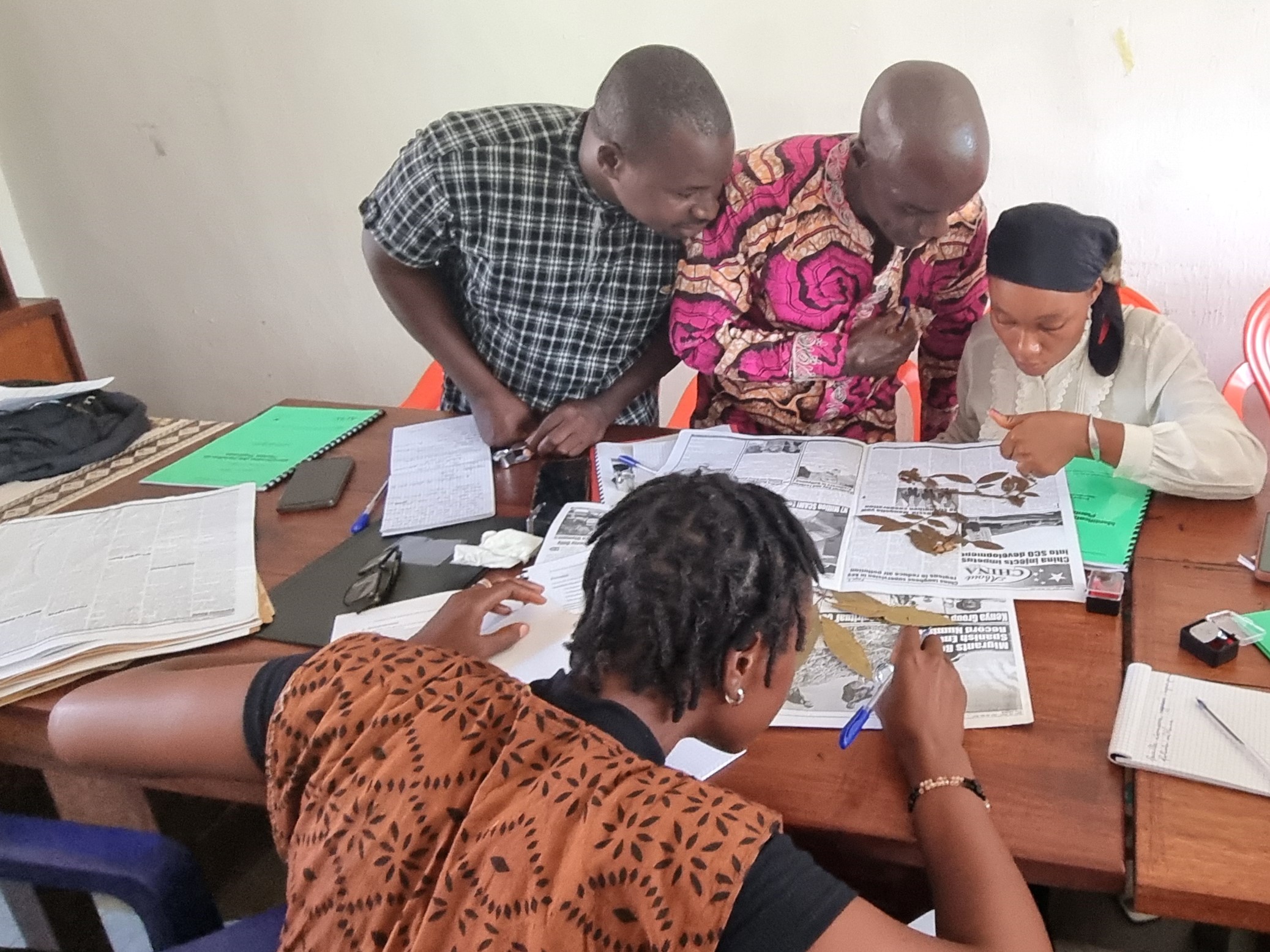
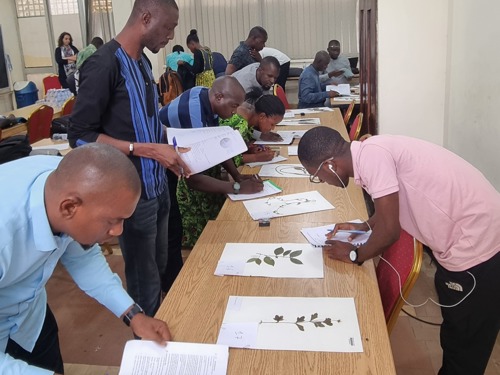
Trainees at the second plant ID course at Sérédou Herbarium identifying specimens. Credit - Charlotte Couch, Royal Botanic Gardens (RBG) Kew.
Training the next generation of botanists in Guinea
The Republic of Guinea has some of the most diverse flora in continental tropical Africa with 30% assessed as threatened by the IUCN Red List. There is, however, a shortage of botanists and taxonomists to study these species. Part of this project is to train the next generation of botanists. Something that has become evident over many years working in Guinea is that although many people know their individual plants, few can respond to the question ‘why it is that particular family?’ This fundamental part of plant identification is not covered in university courses since botany is no longer taught at undergraduate level.
To address this, we embarked on an ambitious task: to deliver the first Tropical Plant Family Identification courses in Guinea in October 2024. The Tropical Plant Family Identification course is among RBG Kew’s flagship courses; it has been taught for decades at Kew and covers 70 families over 2 weeks, which is quite intense! This course has been adapted and taught overseas in a variety of countries over the years, but never in French. To overcome this challenge, Kew partnered with Missouri Botanical Garden as well as our in-country partners Herbier National de Guinée (HNG) and Centre Regional de Recherche Agricole, Sérédou (CRRAS), both institutions with herbaria. We reduced our course to 6 days for 20 people per course, so that we could offer it for free. Since not all tropical families are present in the same density across the tropics, we had to decide which families were most important for Guinea.
In August 2024 we launched an open call for candidates, posted on social media and the HNG website. We had an enormous response to the call - 140 applications for 40 places in total. If we were worried that there wouldn’t be sufficient interest in this course, we needn’t have been! We had two sites, one at each herbarium and they are at opposite ends of the country. We also wanted to promote women in science across the courses and where possible have an even split of participants. This was easier to achieve on the Conakry course than the Sérédou course and overall, we only had 17% female candidates. The participants were from various academic and research institutions, private sector, NGOs, independent and government organisations. There was also a mix of backgrounds i.e. university graduates, high school graduates, and those learning on the job. However, they all needed a minimum level of French to attend the course. In Conakry we had a 50:50 female / male split, in Sérédou we only had 3 women on the course. This could be due to the location and the high number of forestry officers on this course which is a male dominated field. We will review this before the next courses in 2025.
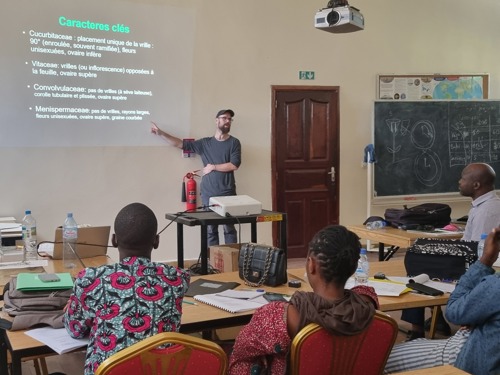
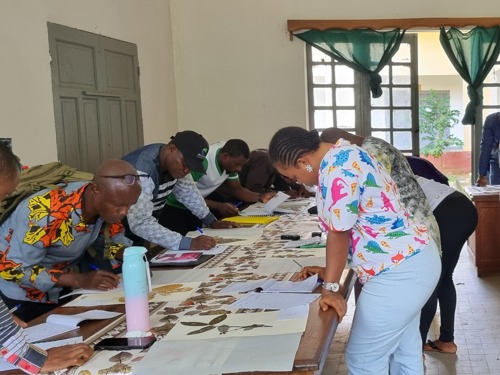
The participants studied 33 families over 5 days with day 6 being revision and the final exam. The course was very practical with short lectures on a family or group of families followed by a session looking at named herbarium specimens to understand the key characters. As the week progressed, we introduced family sorts of specimens with the names obscured for them to practice what they had learnt and make identifications. This was made in groups of four to five trainees in order to facilitate and stimulate confronting views, discussions and sharing of knowledge. The course relied heavily on the herbarium specimens for teaching as you cannot guarantee having fresh flowering and fruiting material available at the time of the course. We supplemented where possible with fresh material, but without the herbarium specimens it would have been very difficult.
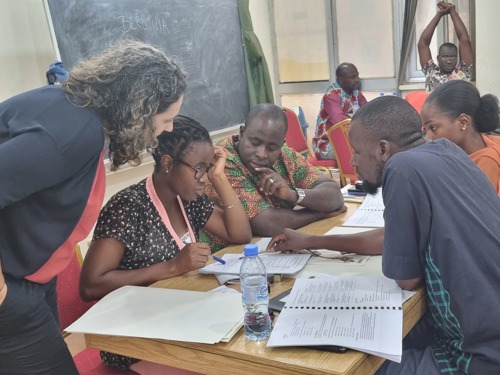
Day 6, revision day, had more family sorting to practice and then in the afternoon, they had an exam, which consisted of the identification of 15 specimens in 90 minutes. It was an open book exam, but still quite tough. Although the previous identification sessions were made in groups, the identifications during the exam were to be made alone, in order for us to assess each trainee’s capacity. The top three best scorers were awarded prizes, always good to have some extra motivation!
It was a steep learning curve for both the trainers and the participants. For us trainers, we hadn’t realised the intensity of the course. In Conakry we only had three trainers which was hard work, but at Sérédou we were joined by a Guinean botanist colleague to make four trainers which was a much better ratio of trainer to students. For the students, it was the first time some of them had heard some of the terminology, or they had only learnt it in theory. Following post-course feedback, we will make some modifications to the test, presentations, and course manual before the next course to improve it. As part of the ongoing training programme, we will be inviting some of the graduates back to help teach the 2025 courses.
Written by Charlotte Couch, Ehoarn Bidault, and Sékou Magassouba. For more information on this Darwin Initiative Capability & Capacity project DARCC044, led by Royal Botanic Gardens (RBG) Kew, please click here.